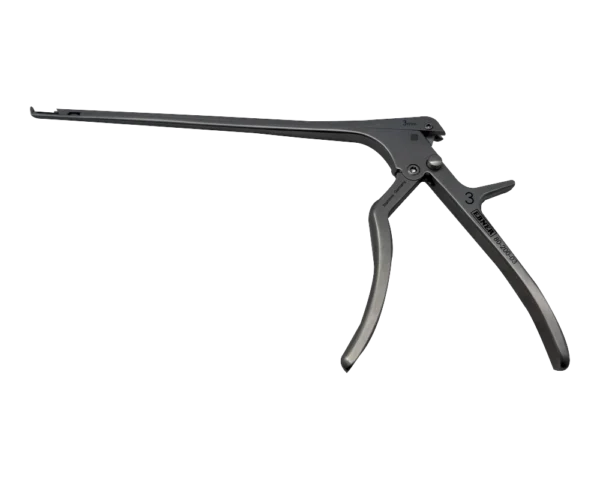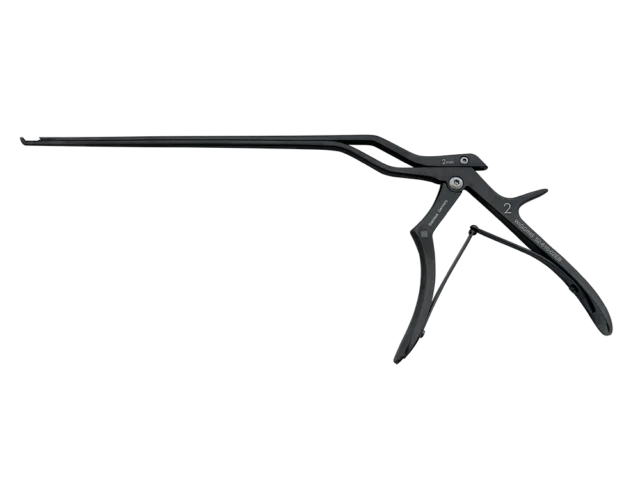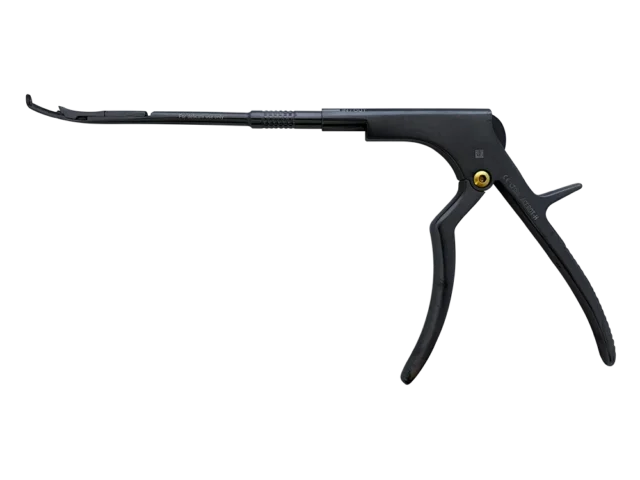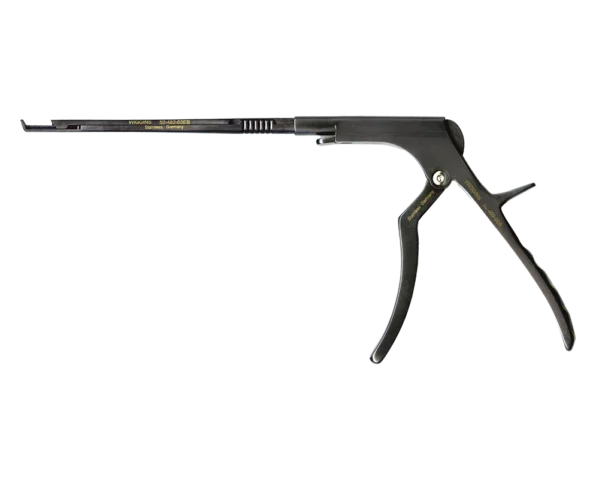
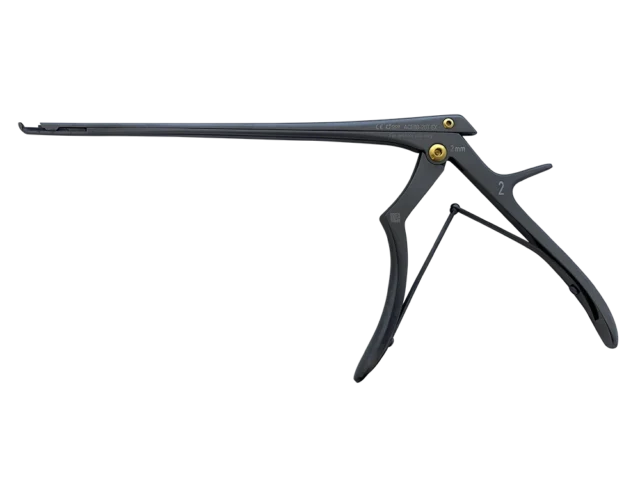
ACE Medical Kerrison Rongeurs
Precision Kerrison rongeurs for spinal decompression, offered in 5" paediatric through 10" lengths with Fine, Thin, an…
View details
ACE Medical
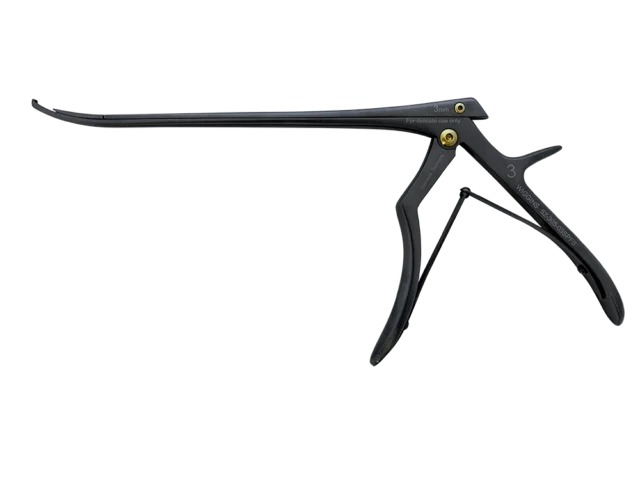
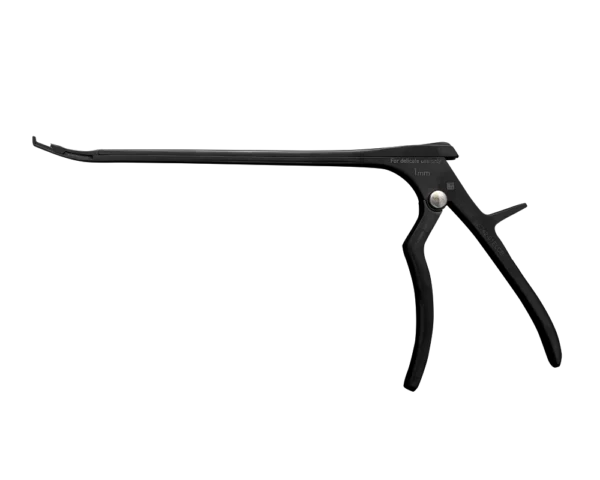
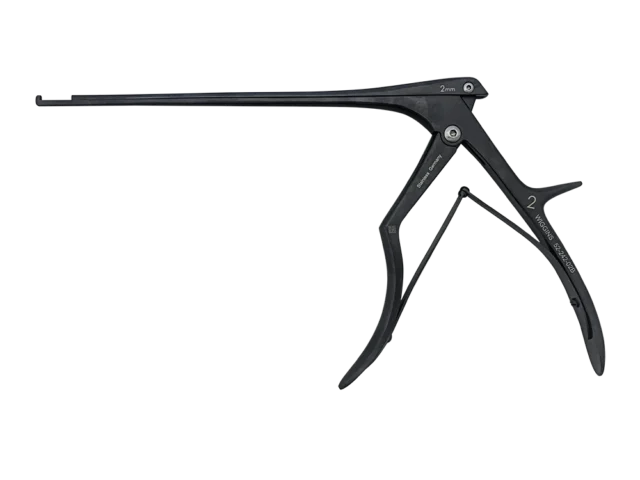
EB MED CO brings one of the most complete selections of Kerrison rongeurs to Canadian spine surgeons, distributing both the ACE Medical and Wiggins Medical lines. Every instrument is hand-finished in a southern German factory and cleared for use around the spine and delicate neural structures. Whether the case calls for an ultra-thin footplate for a delicate ACDF, a bayonet shaft for minimally…
15 products available to Canadian hospitals and surgical centres through EB MED CO.
Precision Kerrison rongeurs for spinal decompression, offered in 5" paediatric through 10" lengths with Fine, Thin, an…
German stainless steel Kerrison rongeurs from Wiggins Medical in six lengths, ten bite widths and three footplate prof…
German-made detachable Kerrison rongeurs in satin stainless steel, 8" thin footplate, 1 mm to 5 mm bites.
Bayonet-shafted Kerrison rongeurs from ACE Medical with thin footplate and integrated ejector, sized for MIS and micro…
Bayonet-shafted Kerrison rongeurs from Wiggins Medical built for MIS and tubular spine access, with a 7-inch working l…
Modular rotating Kerrison rongeur (Sara model) from ACE Medical with seven 45-degree rotation positions, 8-inch shaft,…
Modular Wiggins Medical Kerrison rongeur with a push-button interchangeable-shaft handle and 45-degree rotation across…
Curved Kerrison rongeurs from ACE Medical in slight (sublaminar) and standard (foraminotomy) curve patterns, 8" and 10…
Wiggins Medical curved Kerrison rongeurs in 8 inch working length with 2-4mm bites, six curve profiles and thin or ult…
Take-apart curved Kerrison rongeurs in an 8" length with thin footplate, available in slight-curve (1–3 mm) and standa…
Take-apart Kerrison rongeurs from Wiggins Medical with coded shaft-to-cutter matching, built for thorough reprocessing…
High-leverage Wiggins Medical Spurling Kerrison rongeurs with a 16mm bite length, 40° or 90° footplates, and optional…
Take-apart Spurling Kerrison rongeur from Wiggins Medical with a 15 mm bite, 8-inch length, ejector, and 2-6 mm bite w…
Wiggins Medical down-biting Kerrison rongeurs in 8-inch length with 40- or 90-degree downward footplates, thin or stan…
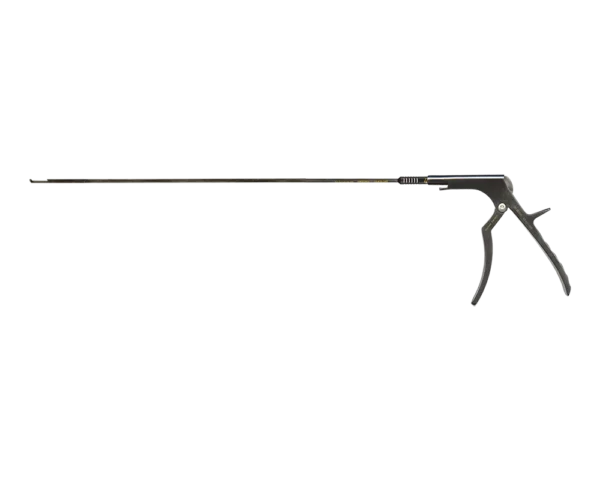
Extended-length Wiggins Medical Kerrison shafts (10", 12", 14") with thin footplates and 45-degree indexed rotation, d…
The Kerrison rongeur is the gold-standard bone punch of spine surgery, and EB MED CO is proud to supply Canadian hospitals and surgical centres with two complementary German-made lines: ACE Medical and Wiggins Medical. Both are produced in the same renowned southern German facility, where generations of metallurgical expertise meet meticulous hand-finishing and rigorous quality control.
ACE Medical Kerrisons are built around predictable cutting and uninterrupted workflow. Every ACE Kerrison carries an ejector integrated into the shaft, clearing bone fragments automatically after each bite. Surgeons who value rhythm and speed during laminectomy, foraminotomy and discectomy tend to gravitate to this design.
Wiggins Medical Kerrisons, a respected name in spine instrumentation since 1992, answer with configurational breadth: an extensive catalogue of patterns, working lengths, and design variants, many available with a pin ejector or no ejector at all. Surgeons can choose the simplicity of a non-ejector punch for tight anatomy, or the debris control of a pin ejector in confined spaces, across curved, bayonet, rotating, take-apart and specialty patterns.
Together the two lines cover cervical, thoracic and lumbar applications with the balance, precision and durability spine surgery demands.
Picture the executive parking lot at a German engineering firm. Between the flagship sedans sits a plain diesel wagon. It comes from the same engineering tradition, meets the same tolerances and passes the same inspections. It skips the leather and the chrome, and it is still running strong at 500,000 kilometres.
That is the Ebner Economy Detachable Kerrison. Made in Germany and held to the same quality standards as our ACE Medical and Wiggins Medical lines, it gives up the finish, not the standard: satin surgical stainless steel in place of a black coating, one proven configuration in place of a full catalogue. The shaft is 8″ with a thin footplate, in bites from 1 mm through 5 mm, and it comes apart for cleaning just like the premium detachables.
For hospitals building backup sets, opening new operating rooms or stocking high-volume trays, it puts a true German Kerrison on every tray without premium pricing on every tray. View the Ebner Economy Detachable Kerrison Rongeurs.
Each Kerrison is made entirely from German stainless steel, combining grades 420 and 304 for strength, corrosion resistance and edge stability through years of reprocessing. Production runs under ISO 13485-certified quality management, holding every instrument to tight manufacturing tolerances.
Where many competitors recommend sharpening a Kerrison every 15 uses, these instruments are engineered to hold their edge for the life of the tool, typically four to five years of clinical service without routine sharpening. That translates directly into less downtime, fewer backup sets, and lower maintenance budgets for Canadian facilities.
A Kerrison is a system, and every component matters:
Predictable bite depth, clean cutting and stable footplate positioning are what prevent slipping, excess force and unintended trauma.
Cervical spine and ACDF: thin and ultra-thin footplate models permit precise removal behind posterior osteophytes while protecting the cord and nerve roots.
Lumbar laminectomy and decompression: standard footplates provide the strength to take thicker lamina and ligamentum flavum, and larger bite widths keep decompression efficient without sacrificing control.
Foraminotomy: slightly curved and standard-curve patterns follow anatomical contours into the neural foramen, decompressing nerve roots with controlled angulation and clear visibility.
Minimally invasive spine surgery: bayonet shafts keep the hand out of the microscope’s visual field, while rotating Kerrisons allow angle changes without repositioning instrument or endoscope.
Endoscopic and transforaminal work: long working lengths with thin footplates operate through tubular retractors and narrow corridors for controlled bone removal.
A laminectomy should be the predictable foundation of a spine case, yet a dull Kerrison can make it the longest part. Partial bites, excess hand force and constant repositioning add seconds that compound into minutes, or hours across multiple levels. Worse, a dull edge that skates off sclerotic bone or a dense osteophyte can send the instrument toward the dura, risking a dural tear or CSF leak, complications that extend operative time and may demand suturing, sealants or grafting.
Sharp, reliable Kerrisons remove those risks. The surgeon can seat the footplate behind bone and complete each bite without hesitation, in single clean cuts. That control matters most in decompression near critical anatomy.
Repeatedly squeezing an underperforming rongeur strains the hand, wrist and forearm, and over a career can contribute to fatigue and carpal tunnel symptoms. Instruments that cut cleanly require fewer bites and less grip pressure, a meaningful difference for high-volume spine practices. Facilities benefit too: shorter decompressions mean less anaesthesia exposure, smoother scheduling, reduced staff fatigue and better throughput.
Frequent sharpening pulls instruments from rotation, changes bite geometry over time, and pushes hospitals to buy extra sets just to cover downtime. Because ACE and Wiggins cutting edges do not require routine sharpening, sets commonly stay in service four to five years with minimal maintenance, simplifying inventory and eliminating a hidden cost centre for sterile processing departments.
No two surgeons operate identically. Some want an ejector clearing debris on every bite of a high-volume lumbar decompression; others want the tactile feedback of a pin ejector, or a plain punch with manual clearing, for fine cervical work. Length, bite width and footplate style follow the same logic: shorter working lengths for paediatric cases, longer shafts for deep lumbar exposure, ultra-thin footplates for ACDF, standard footplates for lumbar laminectomy, plus curved, bayonet, rotating and detachable variants for specialized approaches.
By carrying both ACE Medical and Wiggins Medical lines, EB MED CO lets Canadian surgeons build a tray that adapts to their hands rather than the other way around. Contact us to configure the ideal Kerrison set for your surgical technique.
Tell us the sizes, tip configurations, and quantities you need. We quote Canadian hospitals and surgical centres within one business day.
Request a Quote