Kerrison Rongeurs
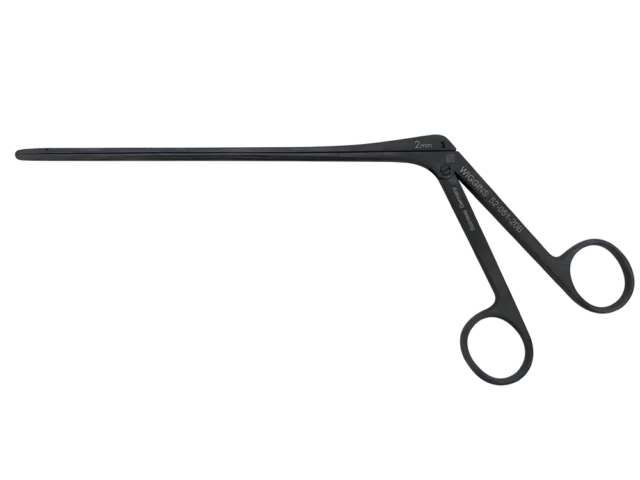
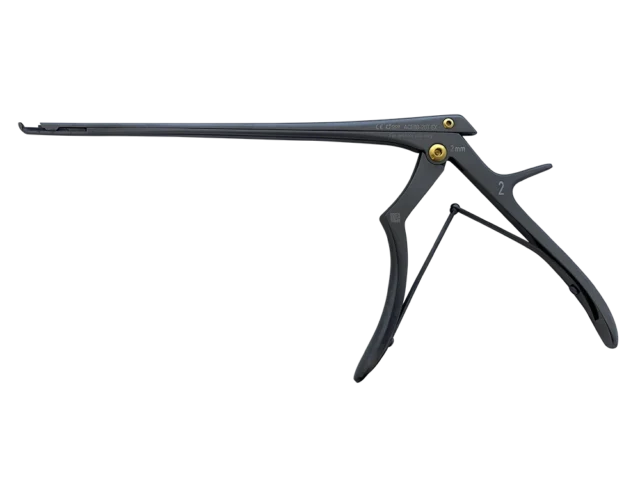
EB MED CO brings one of the most complete selections of Kerrison rongeurs to Canadian spine surgeons, distributing bot…
View details
EB MED CO supplies Canadian hospitals and surgical centres with precision spine surgery instruments from ACE Medical and Wiggins Medical, hand-finished in southern Germany. From cervical decompressions to lumbar fusions and complex deformity work, the range covers Kerrison rongeurs in ultra-thin, thin and standard footplates, pituitary rongeurs, curettes, dissectors, probes and retractors. What…
63 products available to Canadian hospitals and surgical centres through EB MED CO.
EB MED CO brings one of the most complete selections of Kerrison rongeurs to Canadian spine surgeons, distributing bot…
Pituitary rongeurs are compact, cup-tipped instruments used to grasp, cut, and remove soft tissue and small bone fragm…
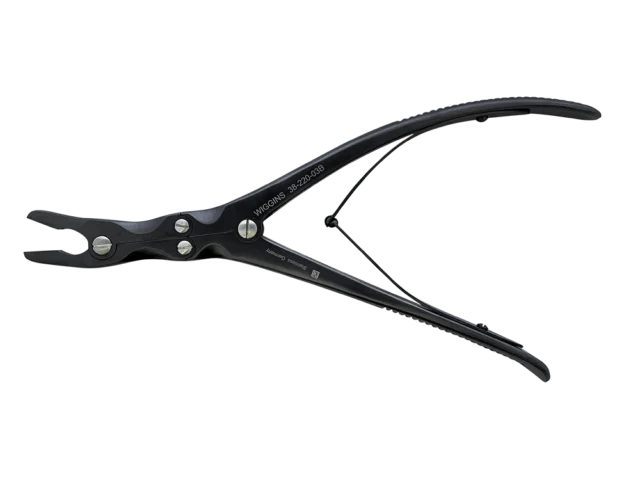
Leksell rongeurs remain a mainstay for bone removal in spine and neurosurgical work, valued for a cutting action that…
Laminectomy calls for an instrument tray that can move confidently from broad bone work to the fine, controlled steps…
Minimally invasive spine surgery asks a great deal of an instrument: a slim profile that fits through a tubular retrac…
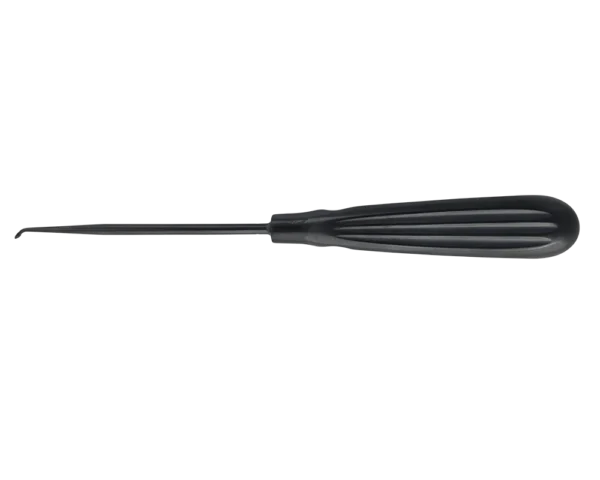
Wiggins Medical Bruns (Epstein) bone curettes in 8 and 10 inch lengths, three cup sizes and three tip orientations for…
Spinal procedures demand instruments that match the delicacy of the anatomy involved. EB MED CO proudly distributes the ACE Medical and Wiggins Medical spine lines across Canada, giving surgeons and procurement teams access to German-made tools engineered for accuracy and control at every stage of a case.
Spine surgery addresses conditions ranging from degenerative disease to trauma. The most common procedure families include anterior cervical discectomy and fusion (ACDF), artificial disc replacement, lumbar fusion techniques, laminectomy and deformity correction. Each demands its own instrument set, chosen for the anatomy and working corridor involved.
ACDF remains the workhorse procedure for cervical disc herniation, degenerative disc disease and nerve root compression in the neck. The damaged disc is excised and the adjacent vertebrae fused, relieving pressure on the cord and nerves. Because the working space is confined and the stakes are high, instrument selection is critical.
ADR preserves motion where fusion would eliminate it: the damaged disc is replaced with an artificial implant rather than joining the vertebrae permanently. Precise preparation of the disc space determines implant fit and long-term performance. ACE Medical Kerrisons, with their fixed ejector mechanism, give exceptional control during disc removal, while Wiggins Medical detachable and rotating Kerrisons add a rotating shaft and larger bite capacity for hard-to-reach anatomy. Wiggins pituitary rongeurs clear residual disc material, probes confirm disc space depth and sizing before implant insertion, and dissectors, MIS suctions and suction retractors keep the field exposed and clear.
Lumbar procedures treat herniated discs, spinal stenosis and degenerative disc disease of the lower back, with the goals of decompressing nerves, easing pain and restoring stability.
Across all three approaches, Kerrison rongeurs handle discectomy and laminectomy bone work, pituitary rongeurs clear herniated disc material from the canal, curettes and bayonet dissectors remove debris while sparing soft tissue, and probes confirm the space is ready for fusion or stabilization.
Laminectomy removes part or all of the lamina to decompress the spinal cord or nerve roots, most often for stenosis or degenerative disease. With sharp, well-made instruments, the decompression itself can take as little as five minutes; with dull ones, a routine case becomes a prolonged struggle. ACE Medical and Wiggins Medical Kerrisons are engineered for exactly this: clean bone removal, smooth action and confident decompression. Wiggins Leksell rongeurs step in when substantial bone must come out quickly, handling tough fragments in demanding cases. Pituitary rongeurs then clear the canal of residual material, and probes and dissectors confirm decompression is complete.
The lateral approach works through a narrow corridor around neural and vascular structures, so instrument length and precision matter. Long 12-inch and 14-inch Kerrisons preserve line of sight through small incisions; dissectors and curettes expose the lateral disc space; 11-inch and 14-inch pituitary rongeurs clear disc material ahead of interbody device placement; and dedicated lateral retractors and probes maintain exposure and help assess anatomy throughout.
No single instrument suits every technique, which is why EB MED CO carries both lines for Canadian customers.
The ACE line emphasizes workflow efficiency. Every ACE Kerrison carries an integrated ejector that clears bone fragments automatically after each bite, so the surgeon never pauses to empty the jaws. Shorter working-length bayonet models make the line especially strong for minimally invasive cases and tight-access procedures.
Wiggins offers breadth: an extensive range of sizes and configurations, available with a pin ejector or with no ejector at all. Surgeons who want the tactile control of a pin ejector, or who prefer manual clearing with visual confirmation, will find their configuration here. The range suits both open and complex procedures where customization matters.
By stocking both families, EB MED CO lets Canadian surgeons choose the tool that complements their technique rather than adapting technique to the tool, whether the case is a minimally invasive decompression or a traditional open fusion.
Working millimetres from neural elements and vessels leaves no room for unpredictable instruments. Smooth action, precise cutting and reliable control let surgeons move through constrained corridors with confidence, shorten operative time, and reduce risk. For hospitals, that means better throughput; for patients, faster recoveries and better outcomes. German-made instrumentation, distributed in Canada by EB MED CO, supports all of it.
Tell us the sizes, tip configurations, and quantities you need. We quote Canadian hospitals and surgical centres within one business day.
Request a Quote